On January 20, 2012, Representative Henry Waxman of California led House Democrats from the Energy and Commerce Committee in writing a letter to several chairmen, requesting that the Committee hold hearings to review the safety of medical devices implanted into patients. In support of their petition, the congressmen cited problems associated with medical devices, such as transvaginal mesh implants, which have caused serious injuries to patients. According to Rep. Waxman, these harms demonstrate the need for regulatory reform. Some of the vaginal mesh implants that have been the subject of ongoing lawsuits include the Gynecare Prolift, Gynecare TVT, Bard Avaulta, American Medical Systems Perigee, Apogee and Elevate, and Boston Scientific Obtryx and Pinnacle.
Claims In Pelvic Mesh Litigation Point To Flawed FDA Approval Process
In stressing the need for regulatory reform, Rep. Waxman examined transvaginal mesh implants. According to Rep. Waxman, complications and adverse side effects associated with transvaginal mesh provide a clear illustration as to why regulatory reform is warranted. As discussed in great detail in the letter, transvaginal mesh implants received market clearance from the U.S. Food and Drug Administration (“FDA”) through the expedited 510(k) process. By utilizing this process, manufacturers of these devices did not have to conduct clinical testing in order to receive approval or demonstrate their safety. Since transvaginal mesh was introduced into the market, the FDA has received thousands of adverse event reports, and issued a series of alerts to warn consumers of dangerous complications associated with vaginal mesh. In fact, the FDA is still conducting an ongoing safety review. The FDA estimates that 300,000 women were implanted with vaginal mesh in 2010.
If you or a loved one has already had a vaginal mesh product manufactured by Gynecare, Ethicon, Johnson & Johnson, C.R. Bard, American Medical Systems or Boston Scientific and have had mesh complications such as mesh erosion, contact a vaginal mesh lawyer today for a free consultation.
On August 25, 2011 Public Citizen, a consumer advocacy group representing more than 225,000 members and supporters nationwide, petitioned the Food and Drug Administration (FDA), pursuant to the Medical Device Amendments to the Federal Food, Drug, and Cosmetic Act, 21 U.S.C. §§ 360f and 360h, and 21 C.F.R. §§ 10.30, 810, and 895, to immediately:
(1) ban the marketing of all currently available non-absorbable surgical mesh products specifically designed and labeled for transvaginal repair of pelvic organ prolapse (POP) — which were used in an estimated 67,500 surgical procedures in the U.S. in 2010* — because these devices (a) offer no clinically significant benefits in comparison to surgical repairs for POP performed without placement of surgical mesh; and (b) have high rates of serious complications, many of which require additional surgical intervention and some of which are not amenable to surgical correction and result in permanent life-altering harm, therefore presenting “an unreasonable and substantial risk of illness or injury,” the standard for the FDA to institute proceedings to ban a device under the device law, 21 U.S.C. § 360f and 21 C.F.R. § 895.21(a);
(2) order all manufacturers of non-absorbable surgical mesh products specifically designed and labeled for transvaginal repair of POP to recall these products; and
(3) require that any non-absorbable surgical mesh product specifically designed and labeled for transvaginal repair of POP that is proposed for marketing in the future be classified as a class III device and be approved for marketing only under a pre-market approval application (PMA) that includes data from well-designed, prospective clinical trials that provide a reasonable assurance that the surgical mesh product is safe and effective.
Public citizen and the doctors supporting its petition to ban bladder sling mesh have focused their petition on seven different surgical mesh products that are marketed specifically for use on POP repair. These vaginal mesh products are the following:
- Gynecare Prolift Total, Anterior, and Posterior Pelvic Floor Repair Systems (Ethicon, Inc. — a Johnson & Johnson subsidiary)
- Gynecare Prolift +M Total, Anterior, and Posterior Pelvic Floor Repair Systems (Ethicon, Inc.)
- Gynemesh Prolene Soft Nonabsorbable Synthetic (Ethicon, Inc.)
- AMS Elevate Anterior and Apical Prolapse Repair System (American Medical Systems, Inc., Minnetonka, MN)
- Pinnacle Pelvic Floor Repair Kits (Boston Scientific Corp., Marlborough, MA)
- Avaulta Support System (C.R. Bard, Inc., Covington, GA)
- Polyform Synthetic Mesh (Proxy Biomedical, Ltd., Galway, Ireland)
There are clear differences between what is legal and what is ethical with regard to the use of surgical devices such as the ever-expanding number of [trocar]-and-mesh kits now marketed for the treatment of incontinence and prolapse. Unlike drugs—which must be shown by clinical trials to be both safe and effective prior to their release—current regulations in the USA do not require medical devices such as the mesh kits for incontinence surgery and prolapse repair to meet this burden of proof [1]. If the Food and Drug Administration decides that a device is “equivalent” to something that has already been cleared for release, it is allowed to enter the market. Independent clinical trials are not currently required. Thus, permission to allow a new device to enter the market is largely a political decision; but legal permission to market a device is not the same as using it in an ethical manner…
[ACOG] should throw its considerable weight behind efforts to bring the legal requirements for marketing new devices in line with our profession’s ethical obligations to our patients. New medical or surgical devices should not be allowed into the American or any other world market until there is definitive evidence of the devices’ safety and efficacy on the basis of properly designed, properly powered clinical trials. Rather than changing policy to accommodate enhanced reimbursement for ethically questionable practices, ACOG should push for more stringent regulatory control of the medical device industry.
- Synthetic surgical mesh placed during transvaginal repair of POP commonly causes many serious adverse events.
- Patients who undergo transvaginal POP repair with surgical mesh are subject to many mesh-related complications that do not occur in patients who undergo POP repair without mesh.
- The most common complication caused by surgical mesh used in transvaginal POP repair is mesh erosion. This adverse event occurs in approximately 10% of women undergoing transvaginal POP repair with surgical mesh.
- More than half of the women who develop mesh erosions from non-absorbable, synthetic mesh require surgical excision. Some women require two or more additional surgeries.
- Some adverse events, such as mesh contraction, can be life-altering for some women. Some complications such as pain and dyspareunia may continue despite mesh removal.
- New-onset stress urinary incontinence (SUI) has been reported to occur more frequently following transvaginal POP repair with mesh than repair without mesh.
Public Citizen therefore concludes that implantation of vaginal mesh products are not currently “ethically justified” and requests (1) that all current bladder sling mesh products in use be recalled, (2) that the FDA ban the use of these products, and (3) that any future products be subject to the full pre-market approval process including appropriate clinical trials.
If you or a loved one has already had a vaginal mesh product manufactured by Gynecare, Ethicon, Johnson & Johnson, C.R. Bard, American Medical Systems or Boston Scientific and have had mesh complications such as mesh erosion, contact a vaginal mesh lawyer today for a free consultation.
Public Citizen FDA Petition (.pdf) Letter from Daniel S. Elliott, M.D. of the Department of Urology at the Mayo Clinic (.pdf) Letter from L. Lewis Wall, M.D. of Washington University (.pdf)
On July 13, 2011 the FDA released a Safety Communication regarding the usage of synthetic mesh materials for the repair of pelvic organ prolapse. While the FDA has neither taken the vaginal mesh off the market nor called for a recall, they did state that a variety of complications have been reported by patients and surgeons alike, and wish to make this fact known to surgeons and patients alike. Some of thos complications include mesh erosion, dyspareunia and infections.
If you are considering vaginal mesh or bladder sling surgery, the FDA recommends that you ask the following questions from your surgeon prior to the surgery:
- Are you planning to use transvaginal mesh in my surgery?
- Why do you think I am a good candidate for surgical mesh?
- Why is surgical mesh being chosen for my repair?
- What are the alternatives to transvaginal surgical mesh repair for pelvic organ prolapse (POP), including non-surgical options?
- What are the pros and cons of using surgical mesh in my particular case? How likely is it that my repair could be successfully performed without using surgical mesh?
- Will my partner be able to feel the vaginal mesh during sexual intercourse? What if the surgical mesh erodes through my vaginal wall?
- If bladder sling mesh is to be used, how often have you implanted this particular product? What results have your other patients had with this product?
- What can I expect to feel after bladder sling surgery and for how long?
- Which specific side effects should I report to you after the vaginal mesh surgery?
- What if the mesh surgery doesn’t correct my problem?
- If I develop a complication, will you treat it or will I be referred to a specialist experienced with vaginal mesh complications?
- If I have a complication related to the bladder mesh, how likely is it that the surgical mesh could be removed and what could be the consequences?
- If a tranbsvaginal mesh is to be used, is there patient information that comes with the product, and can I have a copy?
If you or a loved one has already had a vaginal mesh product manufactured by Gynecare, Ethicon, Johnson & Johnson, C.R. Bard, American Medical Systems or Boston Scientific and have had mesh complciations such as mesh erosion, contact a vaginal mesh lawyer today for a free consultation.
On July 13, 2011, the Food and Drug Administration (FDA) issued an urgent public notice advising patients and their healthcare providers to consider alternatives to transvaginal mesh. The advisory also noted that the FDA will be meeting to discuss a potential ban on the mesh. The FDA was prompted to issue this warning after receiving more than 3,875 injury reports associated with the mesh, three of which involved fatalities, from 2005 to 2010.
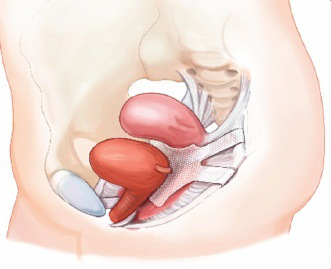
Transvaginal Mesh is a medical device implanted surgically to treat Pelvic Organ Prolapse (POP) and Stress Urinary Incontinence (SUI), conditions that may occur after childbirth and pregnancy. In 2010, more than 75,000 women had vaginal mesh surgery to repair POP.
Recent research shows that at least ten percent of women who have received vaginal mesh implants suffer from mesh erosion within 12 months of surgery and more than half of these patients require additional surgery to remove the mesh following complications such as dyspareunia.
Mr. Mendelsohn and the lawyers at Mazie Slater Katz & Freeman, LLC (“MSKF”) represent dozens of clients allegedly harmed by transvaginal mesh and bladder sling products in filed cases against numerous large corporations as including C.R. Bard, Inc., Ethicon, Gynecare, Johnson & Johnson, Boston Scientific and American Medical Systems (AMS). In fact, MSKF attorneys have been named liaison counsel (lead counsel) in the cases against Ethicon, Gynecare and Johnson & Johnson and we are actively ltiigating against other manufacturers as well.
If you have been injured as a result of a transvaginal mesh or TVT implant, contact vaginal mesh lawyer today for a free consultation.